
Select Page
2022 – 2023
Training quarterback decision-making, one mental rep at a time.
I helped turn an NFL coach’s idea for a 3D quarterback simulator into a connected training platform designed to teach players how to read defenses, make decisions under pressure, and improve through repetition.

Role

Creative Director / Lead Product Designer

Scope

Product Strategy
UX/UI
Interaction
Prototyping
Brand

Platforms

iOS & Android
Web
Unity

The Idea

What if quarterbacks could get mental reps anywhere?

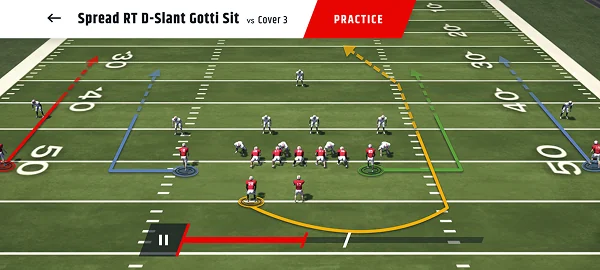
An NFL offensive coordinator came to us with the seed of an idea: what if quarterbacks could watch a play unfold in a 3D environment on their phone, read the defense, and choose where to throw?

The initial proof of concept was closer to a video game than a training platform. Our job was to figure out what it would take to turn that idea into a tool that could actually help quarterbacks improve.
The Original Hypothesis
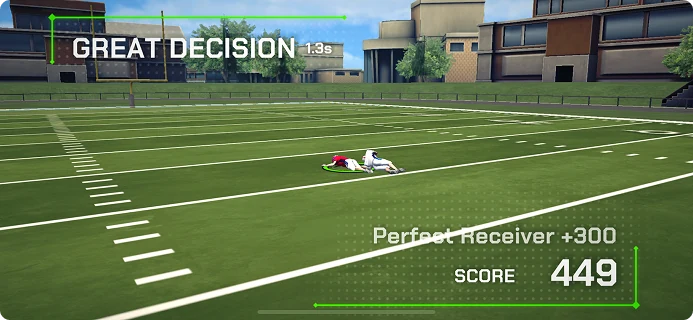
See the playRead the defenseMake the throw
Domain Immersion
Making the throw was only the final step.

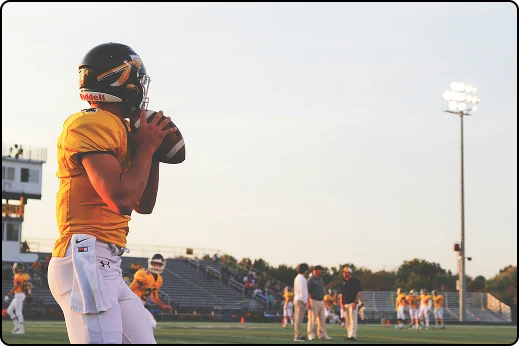
I came into Crucible knowing very little about the mechanics of quarterback decision-making. To design the experience, I first had to understand how quarterbacks actually learn.

I worked closely with our NFL coaching partner, observing how he worked and interviewing him about how quarterbacks prepare, read defenses, and make decisions. He also connected us with other coaches and quarterback specialists who helped us understand how those skills were taught at different levels of the game.
A quarterback is taught where to look.
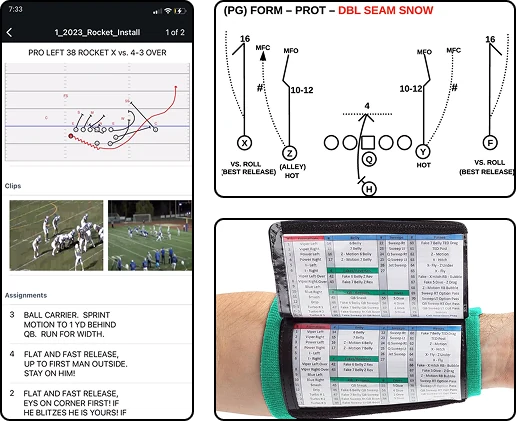
Reading the field isn’t arbitrary. Players learn to identify defensive coverage, key off specific cues, and work through a progression based on what the defense gives them.
Every playbook has its own language.
Teams can use entirely different terminology for similar concepts. Training had to reflect the player’s actual playbook—not ask them to translate it into ours.
Static diagrams only go so far.
Whiteboards and diagramming tools could show where players were supposed to go. We wanted quarterbacks to practice making the decision while the play was actually unfolding.
FROM KNOWINGDOING
Turning quarterback decision-making into something trainable.
The opportunity wasn’t simply to help players memorize more plays. It was to give them a way to repeatedly practice the mental process behind executing them.
READ
Identify the coverage
Read the defense and understand what you’re facing.
Progress
Scan the field
Work through the play’s progression based on what the defense gives you.
Decide
Select the Receiver
Identify the correct target before the window closes.
Repeat
Build the instinct
Get feedback, reset, and run the decision again.
THREE FOOTBALL CAMPS
The simulator worked. That didn’t mean players would use it.
With the core interaction working, we shifted our attention to a harder question: what would make players come back, practice repeatedly, and actually get better?
Each camp gave us an opportunity to push the concept a little further.
Camp 01
Testing the core interaction
Players could complete the reps, but engagement dropped quickly. Getting the interaction right wasn’t enough—we needed a reason to keep coming back.
Camp 02
Making practice competitive
We expanded rankings and leaderboards and gave players more ways to see how they stacked up against one another. Engagement increased, showing us that competition could turn repetition into motivation.
Camp 03
Turning repetition into learning
We introduced more structured lessons and measured players before and after the experience. Players showed improvement in the concepts we tested, giving us early evidence that repeated decision-making could become a training tool.
The Takeaway
Players needed more than access to reps. They needed the fundamentals to get better—and a reason to keep practicing.
FROM SIMULATORPLATFORM
One training experience became three connected products.

As we learned more about how quarterbacks train, the original simulator expanded into a much larger system.

Creating meaningful mental reps meant translating a coach’s playbook into interactive football, turning that football into structured training experiences, and delivering those experiences in a way players would actually want to practice.
Play Editor
Build the football
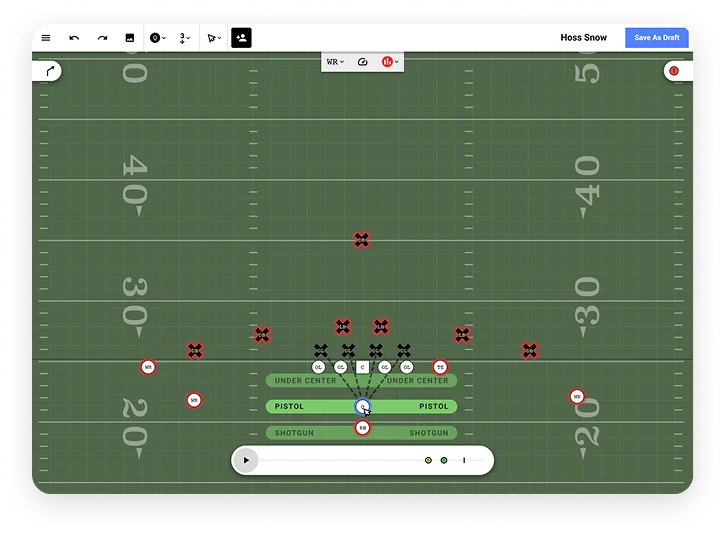
Turn a team’s playbook into interactive 3D scenarios—defining players, assignments, movement, timing, and the different ways a play could unfold.
Content Engine
Build the training
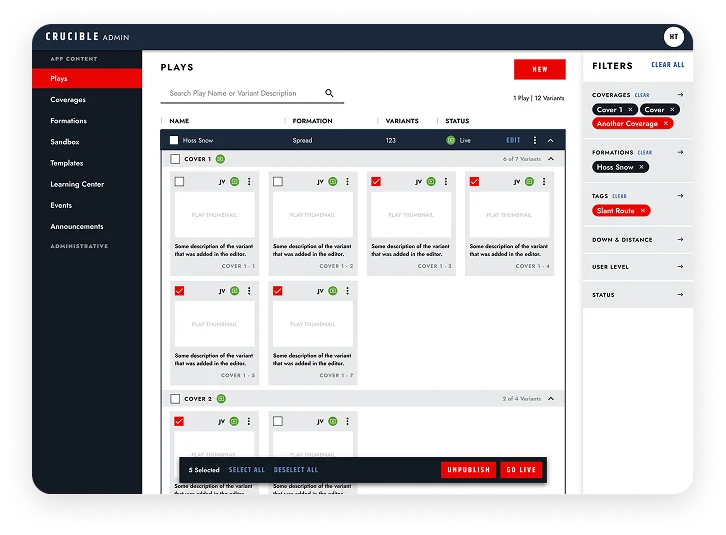
Turn those plays into structured learning experiences: collections, quizzes, challenges, scheduled drops, and new content tied to the moments players already cared about.
Crucible
Train the player
Learn the fundamentals, practice reads, make decisions under pressure, compete with other athletes, and improve through repetition.
Authoring
The power of a 3D editor, designed for people who don’t use 3D tools.

Personalized training only worked if Crucible could reflect a team’s actual playbook. But asking our engineering team to build every play wasn’t scalable—and asking coaches to operate a traditional 3D animation tool wasn’t realistic.

Many of the coaches we spoke with were accustomed to whiteboards or creatively bending tools like Visio into football diagramming software.
The Play Editor had to bridge that gap.
Making complexity approachable
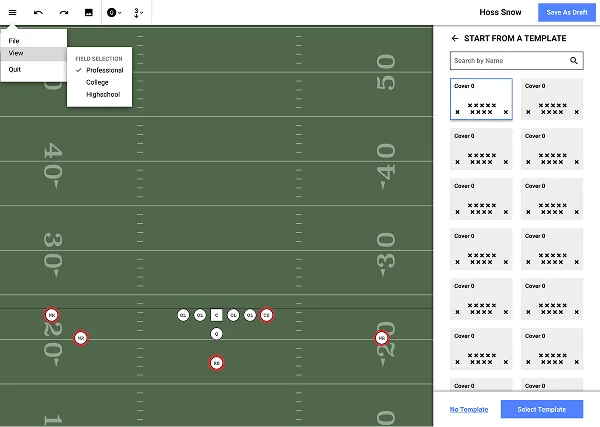
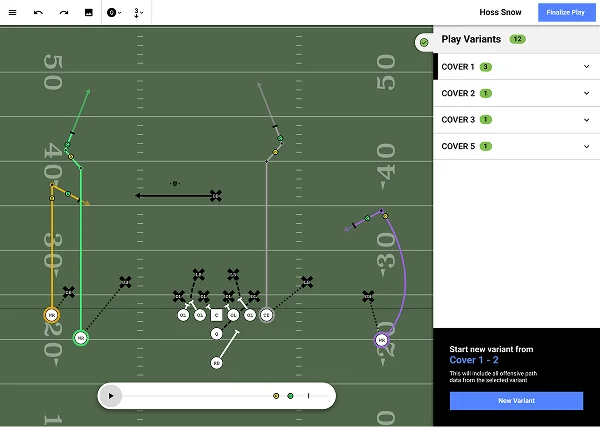
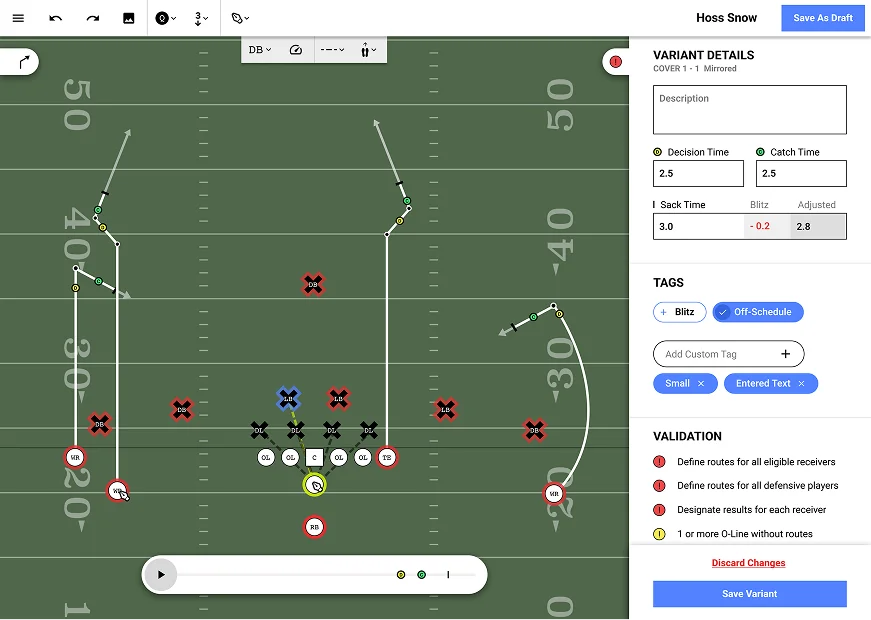
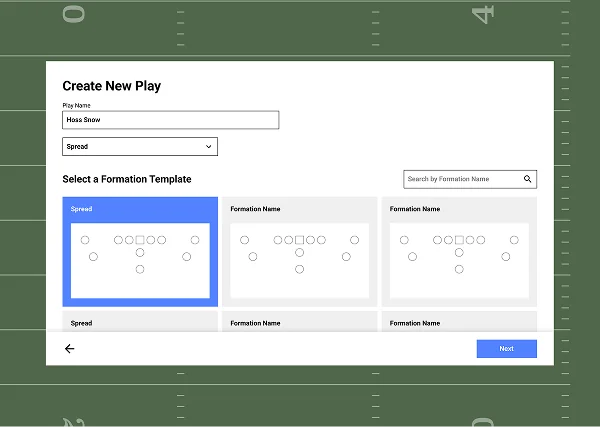
A single play wasn’t a single animation. Coaches needed to define the formation and starting defense, map how every player should behave, then account for how those behaviors changed against different coverages.
Set Up
Name the play and choose the formation.
Configure
Set the starting coverage and field conditions.
Build
Map routes and define player behavior.
Adapt
Map routes and define player behavior.
Technical Collaboration
One interface. Two very different technologies.

The editor combined conventional web UI with an embedded Unity environment responsible for rendering the field, players, and animation.

I partnered closely with engineering to understand what the underlying system could expose, then designed the controls and workflows around those constraints. The goal was to let coaches manipulate a sophisticated 3D simulation while keeping the technology itself largely invisible.

Programming
Turning individual plays into a living training program.

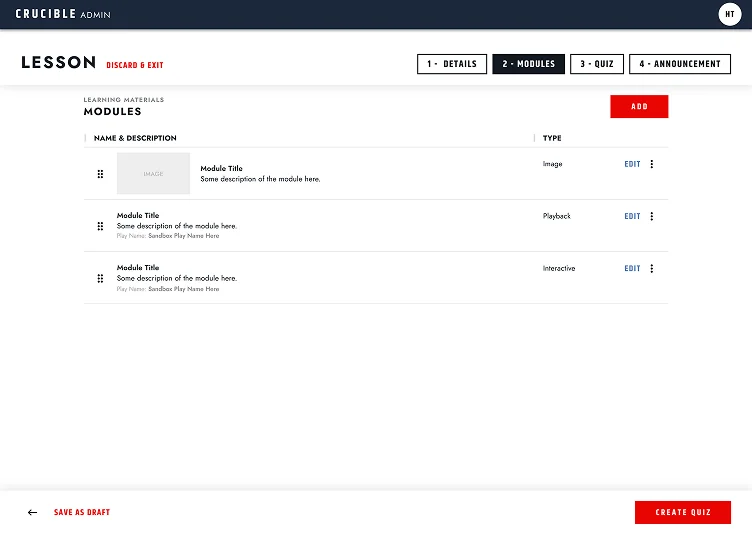
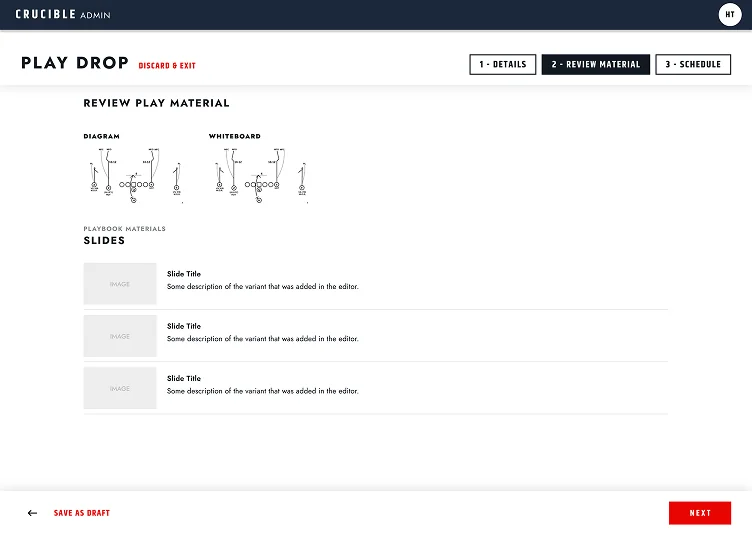
Building the football was only part of the problem. Crucible also needed a way to decide what players should train, how concepts should be grouped, and when new experiences should become available.

I designed the Content Engine to give the team a flexible way to organize the underlying football content into experiences that could evolve alongside the product.
The Play Editor had to bridge that gap.
Collections
Build purposeful sets of plays.
Group related content around the concepts or situations players needed to practice.
Quizzes
Teach before testing the whole decision.
Break complex quarterback knowledge into smaller concepts that could be learned and assessed independently.
Drops & Events
Keep the experience relevant.

Schedule new content around the football calendar—from major games to special challenges inspired by plays athletes were already watching and talking about.

This supported a larger vision for Crucible: not a fixed library of drills, but a training experience that could keep changing.

Engagement
Training only works if players keep training.

One of our biggest early lessons was that simply giving athletes access to more mental reps didn’t mean they would take them.

Repetition was fundamental to the training model, so motivation became a product problem.

We studied learning products like Duolingo alongside games and other habit-forming experiences, exploring how competition, progression, feedback, and personalization could make practice feel rewarding without losing sight of the training itself.
Compete
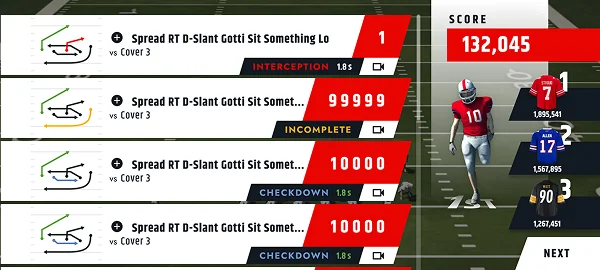
Tap into their competitive instinct.
Leaderboards and rankings gave players a reason to measure themselves against each other.
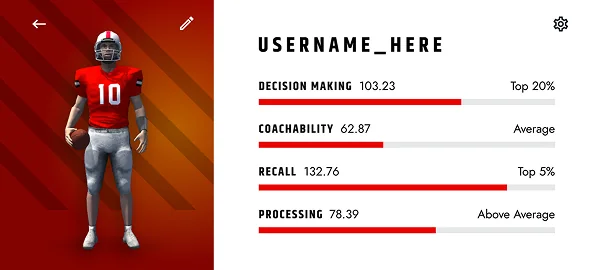
PROGRESS
Make improvement visible.
Scores and performance feedback gave players something tangible to improve against.
Personalize
Give players ownership.
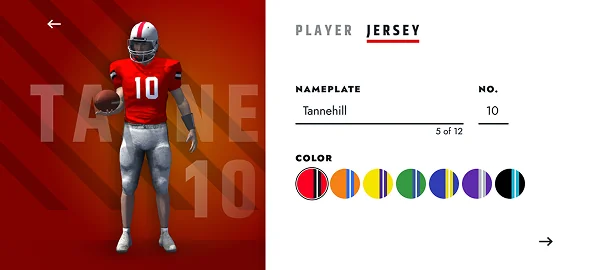
Player identities, customization, and team-specific content helped the experience feel like theirs.
Respond
Reward the decision.
Immediate feedback connected each choice to its outcome while the rep was still fresh.
DESIGNING THE FEEL
Making feedback feel rewarding.

The mobile experience needed to feel closer to a game than homework.

I designed the interaction and motion behavior alongside the visual UI, using animation studies and prototypes to communicate how transitions, scoring, feedback, and other moments of reinforcement should feel in the finished product.

Watch the player experience · 0:54
THE PLAYER EXPERIENCE
Putting it all together.
From learning the play to making the read and seeing the result, the finished experience turned quarterback decision-making into a fast, repeatable gameplay loop.
THE PLAYER EXPERIENCE
Putting it all together.
From learning the play to making the read and seeing the result, the finished experience turned quarterback decision-making into a fast, repeatable gameplay loop.
Watch the player experience · 0:54
DESIGNING AROUND THE PLAYER
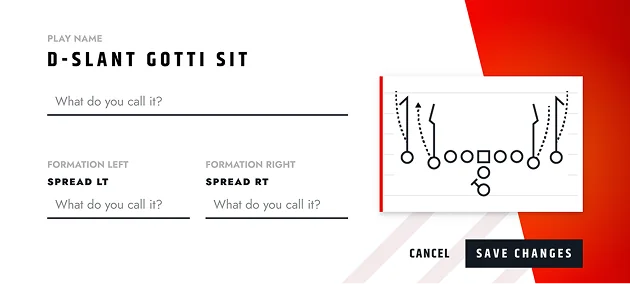
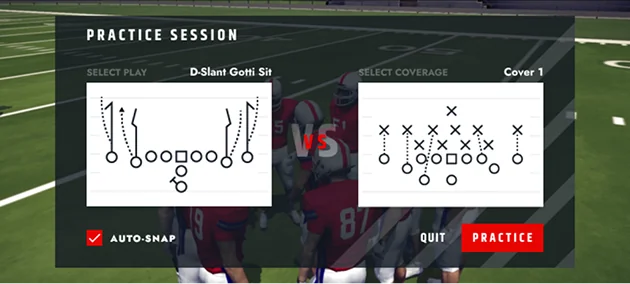
There is no universal football language.

At camp, players reinforced something we’d heard from coaches: every team has its own language. The same underlying concept could have an entirely different name from one playbook to another.

So we gave players and teams the ability to adapt Crucible’s terminology to match the language they were actually learning.

That same thinking influenced what we showed before a rep. We looked at the real-world tools players relied on—including wristbands carrying condensed play information—to understand what context should be available before the snap.
The goal wasn’t to teach players Crucible’s version of football. It was to help them learn theirs.
PRODUCT DIRECTION
Could we measure quarterback intelligence?

As Crucible matured, we began asking what repeated training data could tell us about the player over time.

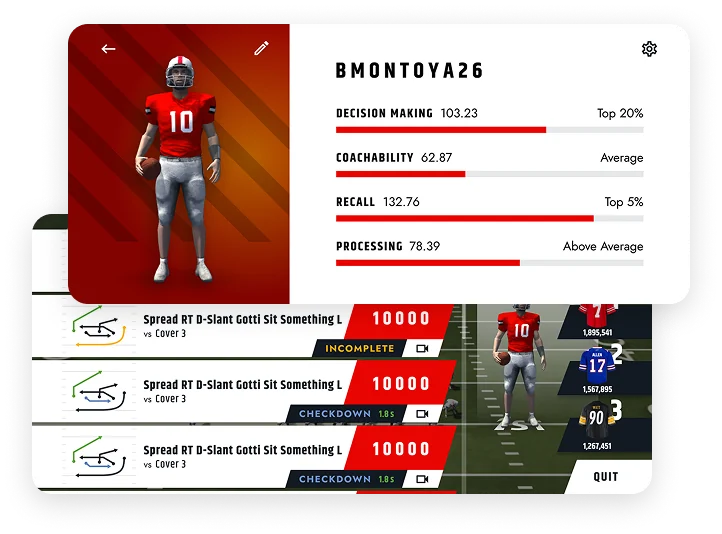
We called the concept QBI — Quarterback Intelligence Score: a way to move beyond individual reps and begin building a broader picture of how a quarterback processed the game.

Player
Understand my progress.
Coach
Identify development opportunities.
Scout
Evaluate how a quarterback processes the game.
Identity
Building a brand for performance under pressure.

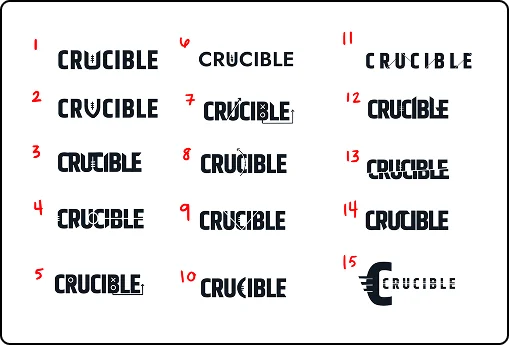
We partnered with an outside naming agency to explore the product’s positioning and name. Once the team selected Crucible, I developed the visual identity around it—from the logo and app icon to color, visual language, and marketing applications.

The name captured something fundamental about the product we were building: putting athletes into repeated moments of pressure so they could become more prepared for the real ones.
Outcome
From concept to a product ready to grow.

Over roughly a year, we took Crucible from an NFL coach’s early idea to a working training platform, tested it across three football camps, and helped bring the product to its next stage.

After securing funding, development transitioned from our consulting team to Crucible’s internal organization.

3 Football Camps
Tested with high-school-level athletes.
Continued Development
Transitioned to Crucible’s internal team
Looking Back
The hardest part wasn’t learning football. It was making practice worth repeating.
I started Crucible expecting the domain itself to be the biggest challenge. And there was a lot to learn. But once I understood how quarterbacks were taught to read the game, the more interesting question became how to turn that knowledge into practice athletes would choose to repeat.
What held up
Hide complexity from the person who shouldn’t have to understand it.
The Play Editor is still one of my favorite parts of the project. It took an unusually complex technical system and put it into the hands of football experts without requiring them to become 3D software experts.
What I’d do differently
Measure the learning more deliberately.

Our football camps taught us a lot, but today I would push for longer trials, better instrumentation, more structured observation, and clearer measures of how players’ understanding changed over time.

I’d also push the Content Engine further toward simplification. Looking back, I can still see places where the underlying information architecture shows through more than it should.

Let's Chat